Thinking about shifting part of your investment strategy across the river? If you hold or shop Manhattan condos and co-ops, Brooklyn’s small multifamily and townhouses can look tempting for income and control. The math can work in your favor, but only if you respect the rules that shape returns in New York City. In this guide, you’ll learn how pricing, yields, taxes, and regulations compare, plus a clear playbook to underwrite your first Brooklyn deal with confidence. Let’s dive in.
Why Manhattan buyers look to Brooklyn
Pricing and yields today
Recent borough medians show Brooklyn’s price strength while Manhattan remains higher overall. In Q3 2025, Manhattan’s median sale price was about $1.15 million versus roughly $916,000 in Brooklyn, with the citywide median near $800,000, according to PropertyShark’s Q3 2025 report. On the rental side, October 2025 asking rents were about $4,600 in Manhattan and $3,752 in Brooklyn, per StreetEasy’s borough snapshot. That price-to-rent gap helps explain why yields often pencil better in Brooklyn.
For small multifamily specifically, recent reporting shows higher going-in cap rates in Brooklyn than many Manhattan condo investments. Matthews’ 2024 year-end summary cites an average price per unit around $356,000 and an average cap rate near 6.7 percent for Brooklyn multifamily sales, a useful mid-market reference for 2 to 10 unit assets (Matthews 2024 Brooklyn multifamily). Your underwriting should always rely on building-level net operating income, but this borough context shows why many Manhattan investors explore Brooklyn for income.
The trade you make
You typically trade some liquidity and convenience for higher yield and more control. Manhattan condos, especially newer and amenity-driven product, can be easier to resell and simpler to hold but often deliver lower cash yields after common charges and taxes. Brooklyn small multifamily can offer stronger income and direct control of the building, tenants, and improvements, but it requires more hands-on management and careful compliance. If you value durable cash flow and have a longer hold horizon, the cross-river shift can make sense.
Property types compared
Who each strategy fits
- Brooklyn small multifamily or townhouses: You want higher initial yield and the ability to add value through renovations and unit turns. You are comfortable with active management or hiring a manager.
- Manhattan condos or co-ops: You want simpler ownership, potential capital appreciation, and amenity-driven demand. You accept that yields can be thinner once you include common charges and taxes.
Ownership and liquidity basics
Co-ops use a shareholder model with board approvals and common sublet restrictions, which makes them less investor-friendly and can affect liquidity. Condos are deeded property with generally greater subletting flexibility and more straightforward resale, which investors often prefer for optionality. For a clear primer on the practical differences, see this overview of condo vs co-op rules and financing.
Taxes and assessment can tilt the math
New York City divides property into classes that determine how assessed value is calculated. Many 1 to 3 family townhouses fall under Class 1, where the target level of assessment is 6 percent, while condos, co-ops, and most 4-plus unit buildings fall under Class 2, where the target is 45 percent. This structural difference can lead to meaningfully different annual tax burdens and is one reason investors sometimes favor 1 to 3 family townhouses for rental use. You can review how assessment works on the NYC Department of Finance site.
Regulations that shape returns
Rent stabilization is a core underwriting factor
If a target building includes rent stabilized units, your upside is defined by law. The Housing Stability and Tenant Protection Act of 2019 tightened deregulation paths and changed how certain capital improvements affect legal rents. You must pull DHCR registration histories and model Rent Guidelines Board increases rather than assuming market resets. Start with the state’s summary of rent stabilization and the ETPA.
HPD registration and lead paint compliance
Small multifamily ownership comes with administrative obligations. Owners of most buildings with 3 or more residential units must complete annual HPD registration and keep contact information current, which affects your ability to take certain legal actions if you fall behind on compliance. Review the basics of annual HPD property registration.
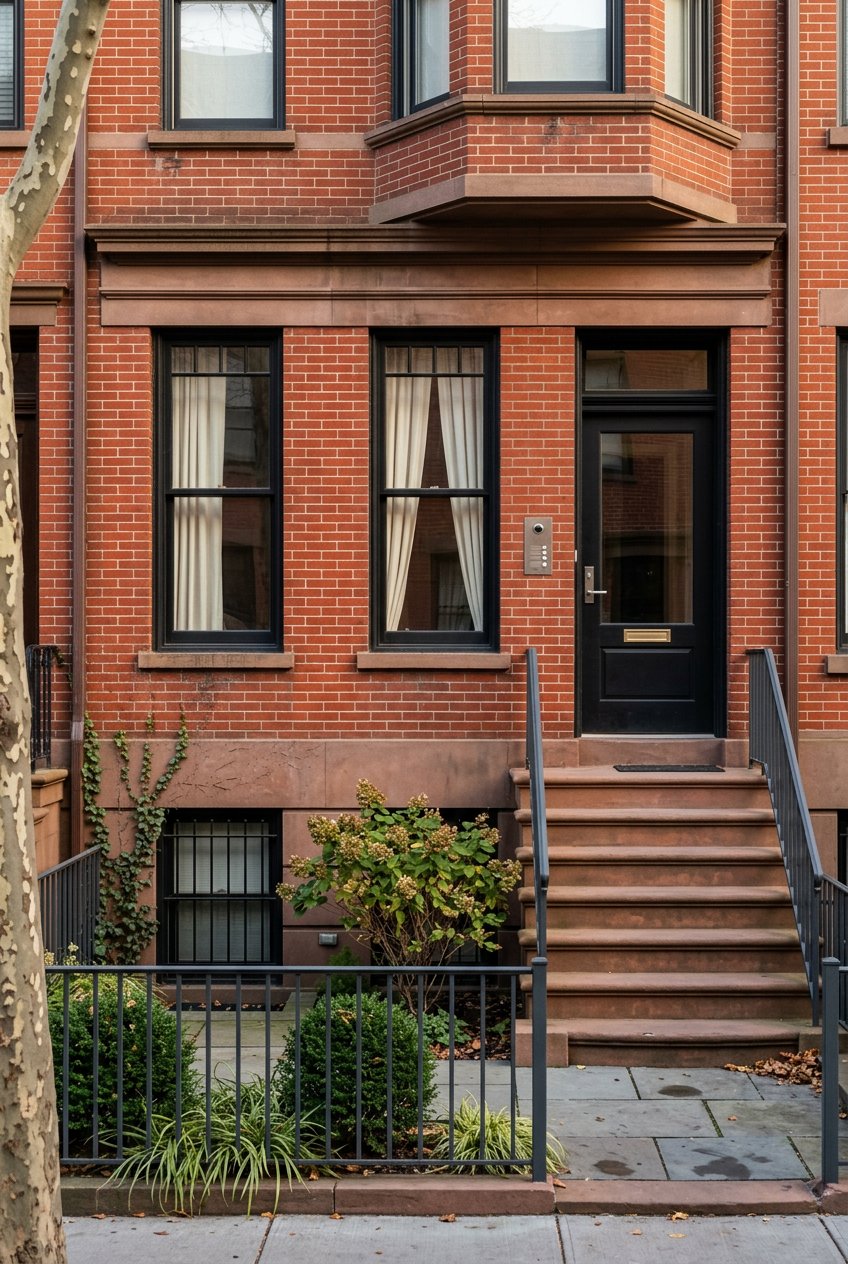
Many Brooklyn brownstones predate 1960, so you should plan for Local Law 1 lead-based paint rules, annual notices, turnover requirements, and recordkeeping. These are recurring compliance tasks that carry penalties if missed. See HPD’s page on lead-based paint obligations.
Operating and management costs
What a manager does and typical fees
If you prefer a lighter lift, a local residential manager can handle leasing, rent collection, maintenance coordination, and reporting. In New York City, full-service management commonly falls in the 6 to 12 percent range of collected rent, with many owners using 8 to 10 percent for modeling. For a quick benchmark, see property management fee ranges.
Insurance and capital reserves
Budget conservatively for insurance and repairs. Premiums for landlord and renovation coverage have risen in recent years, and older buildings often need periodic system and exterior upgrades. As a simple starting point, set aside 5 to 10 percent of gross rent for routine repairs and capital reserves, with higher one-time reserves if major work is likely based on inspections and age.
Condo investor P&L vs small building P&L
With a single condo investment, your P&L is cleaner. You pay your taxes and common charges, and the building’s HOA manages capital projects, though you are exposed to assessments and building rules. With a small multifamily, you control spending and timelines but you carry the full rhythm of ownership and compliance. For a refresher on condo and co-op mechanics, revisit the condo vs co-op overview.
Underwriting playbook for your first Brooklyn deal
Build the numbers with discipline
Start with today’s actual income and expenses. Forecast stabilized NOI by confirming the legal rent status for each unit, applying realistic vacancy, and adding management, taxes, insurance, utilities, and reserves. Compare your implied going-in cap rate to relevant local comps. As a directional anchor for small multifamily, Matthews reported an average cap near 6.7 percent across 2024 Brooklyn multifamily sales, but your deal should stand on its own numbers (Brooklyn 2024 multifamily summary).
Due diligence checklist
- Verify the legal unit count and Certificate of Occupancy. If 3 or more units, confirm compliance with HPD’s annual registration rules.
- Pull the rent roll and DHCR rent histories to confirm stabilization status and registered legal rents. Model permitted increases if units are stabilized using guidance from New York State HCR.
- Review recent utility bills, tax bills, insurance renewals, and get inspections that address lead and structural conditions. See HPD’s lead-based paint requirements.
- Build a pro forma with stabilized NOI, realistic vacancy, an 8 to 10 percent management fee, current property taxes based on assessed value, insurance, and a capital reserve. Compare your result with neighborhood-level references like the Matthews 2024 Brooklyn multifamily report.
- Map your financing. Owner-occupants can use conventional or FHA pathways for 2 to 4 unit properties. Non-owner investors typically use larger down payments or portfolio products for 2 to 4 units, and 5-plus unit loans are underwritten on DSCR and NOI. You can explore example terms through lenders that handle 2 to 4 unit loans, such as this overview of mortgage options for 2 to 4 units.
Timeline and approvals
Condo and co-op purchases often require board package reviews and can involve investor caps or sublet policies that slow timing. Small multifamily closings hinge on clean diligence and financing. Build extra time for DHCR record requests, inspections, and lender underwrites so your closing cadence matches reality.
Where to look in Brooklyn
You will find a spectrum of risk and return across neighborhoods. Many investors consider Bedford-Stuyvesant, Crown Heights, and Bushwick for value-add strategies, while Fort Greene, Park Slope, Downtown Brooklyn, Williamsburg, and Greenpoint often trade at higher prices with strong tenant demand. For recent deal activity and cap rate context across small assets, review the Brooklyn multifamily year-end summary and pair it with hyperlocal comps when you evaluate a specific building.
Putting it together
If you are a Manhattan-focused investor seeking more income and direct control, Brooklyn’s small multifamily and townhouses can deliver stronger going-in yields than many condo or co-op strategies. The key is to respect the rules that govern rent, taxes, and safety, and to build a cash flow model that stands up to line-by-line scrutiny. When you combine disciplined underwriting with thoughtful neighborhood selection, the cross-river move can add durable performance to your portfolio.
Ready to pressure test a specific deal or map a buy plan around your target return? Connect with Elena Smirnova to compare Brooklyn small multifamily against your current Manhattan strategy and move forward with clear numbers and a confident path to close.
FAQs
Will Brooklyn always cash flow better than Manhattan?
- Not always. Brooklyn small multifamily has recently shown higher going-in cap rates than many Manhattan condo investments, but each building is different. Use building-level NOI and local comps, and stress test interest rates and exit assumptions.
How does rent stabilization affect returns in Brooklyn?
- Stabilization can cap annual rent increases and limit your ability to bring units to market rent. Always pull DHCR histories and model permitted increases under HSTPA rules using state guidance on rent stabilization.
Are townhouses more tax efficient than condos?
- Often, yes for 1 to 3 family homes that fall under Class 1, which uses a different assessment level than Class 2 condos and co-ops. Confirm the tax class and assessed value with the NYC Department of Finance before you buy.
What should I budget for management and repairs?
- A conservative starting point is 8 to 10 percent of collected rent for professional management plus 5 to 10 percent for routine repairs and reserves. Fee ranges vary, but you can reference typical property management fees.
What rent levels should I use in my pro forma?
- Use the current rent roll, legal rent status, and recent leases in your micro-market. Borough medians, like StreetEasy’s October 2025 snapshot, are directional only. Your underwriting should rely on unit-level data and verified comps in the immediate area.