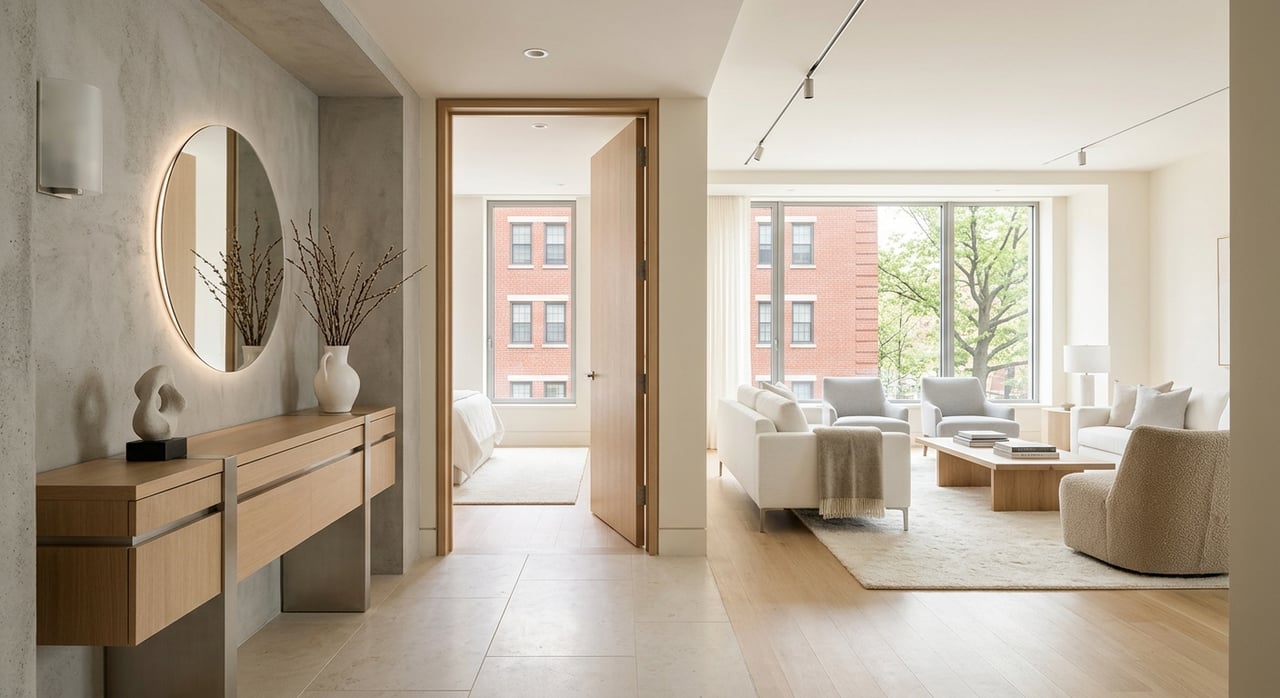
If you are shopping in SoHo, the biggest question is often not whether you want character. It is what kind of ownership experience you want behind that character. Some buyers fall for classic loft volume and industrial bones, while others want the cleaner predictability of a more traditional condo layout. This guide will help you compare the two, understand the legal and practical differences that matter in SoHo, and narrow in on the right fit for your goals. Let’s dive in.
Why SoHo Feels Different
SoHo’s residential identity comes from its industrial past. The SoHo-Cast Iron Historic District was designated in 1973 and protected about 500 buildings across 25 blocks, with a later extension adding roughly 135 more properties.
Many of these buildings were originally built as post-Civil War store-and-loft structures for wholesale dry-goods merchants and manufacturing businesses. That history still shapes what you see today, from cast-iron facades to wide windows and open interior layouts.
For you as a buyer, that means SoHo often feels unlike a standard apartment neighborhood. The housing stock can deliver more volume, more visual openness, and a stronger sense of architectural character than a newer, more conventional condo plan.
SoHo Lofts vs Condos
Choosing between a loft and a condo in SoHo usually comes down to how you weigh space, layout, legal status, and day-to-day simplicity. Both can be attractive, but they serve different priorities.
What defines a classic loft
A classic SoHo loft usually reflects the neighborhood’s former industrial use. These homes often feature open floor plates, larger window openings, and a more expansive feel than a standard apartment.
That sense of height and scale is one of the biggest draws. Still, the exact ceiling height is not a neighborhood-wide rule. It depends on the specific building, floor, and any later conversion work.
What defines a more traditional condo
A more traditional condo layout usually offers clearer room separation and a more familiar residential plan. On paper, that can make furniture planning, privacy, and everyday living feel more straightforward.
It can also be easier to budget for building operations because condo fees are typically structured around common-area maintenance, repairs, insurance, reserves, and similar shared costs. The exact service level still varies by building.
Quick comparison
| Feature | Classic SoHo Loft | Traditional Condo Layout |
|---|---|---|
| Layout | Open and flexible | More defined rooms |
| Feel | Industrial, airy, dramatic | Conventional, structured |
| Light and volume | Often strong, building-specific | Varies by design and exposure |
| Legal complexity | Can be more complex | Often simpler |
| Renovation considerations | May involve landmark or building limits | Depends on building rules |
| Monthly experience | Character-forward ownership | Predictability and services often easier to read |
Legal Status Matters More Than Style
This is where many buyers need to slow down. In SoHo, a unit can look like a loft and still fall into a very different legal category than the one you expected.
The key distinction is whether the property is a standard condo, a JLWQA live-work unit, or a Loft Law IMD unit. Those categories can affect occupancy, financing, and resale, so you should never rely on appearance alone.
Understanding JLWQA in SoHo
What many buyers casually call old artist-in-residence rules is now mostly discussed through JLWQA, or joint living-work quarters for artists, and artist certification. Current city guidance says working-artist certification is required to qualify for JLWQA in the M1-MA and M1-MB districts, and applicants should be certified before occupancy.
City guidance also states that anyone renting, subleasing, or purchasing a loft in SoHo, NoHo, or AIR space elsewhere should be certified before occupancy when that certification requirement applies. This is one reason due diligence is so important before you sign a contract.
How the 2021 zoning change affects buyers
The SoHo/NoHo Neighborhood Plan changed the framework in December 2021. The city created the Special SoHo-NoHo Mixed Use District, replaced the old M1-5A and M1-5B zoning with M1-5, and established a voluntary path to convert existing conforming JLWQA use to residential use.
The same city guidance says new JLWQA conversions are prohibited after December 15, 2021, while existing JLWQA occupancy can continue. That means buyers need to understand whether a unit remained in an existing category or has already moved to a more conventional residential status.
Where Loft Law fits in
The Loft Law is separate from JLWQA. The NYC Loft Board regulates certain former commercial or manufacturing spaces that do not yet have a residential certificate of occupancy and are being legalized for residential use.
If a unit is a covered IMD, tenants may remain while legalization proceeds, even without a residential certificate of occupancy. For you, that means a Loft Law unit may carry a very different risk profile and timeline than a standard condo, even if both have a loft look.
Light, Ceilings, and Everyday Feel
If you are choosing SoHo in the first place, there is a good chance you care about how a home feels, not just how it reads on a floor plan. This is where lofts often stand out.
Because SoHo’s historic store-and-loft buildings were built with large openings and open interiors, many lofts offer a dramatic sense of light and volume. That can create a strong visual experience that a more standard condo layout may not match.
At the same time, you should treat light and ceiling height as building-specific inspection items. Exposure, floor level, nearby structures, and past renovation work can all affect the final result.
Carrying Costs and Building Services
Character is only one side of the decision. Your monthly carrying costs and the level of building services also shape whether a home feels like the right long-term fit.
Condo fees and HOA dues are usually separate from your mortgage. They can range from a few hundred dollars to more than $1,000 per month, depending on the building and what is included.
These fees often cover exterior maintenance, common-area upkeep, water, sewer, trash, building insurance, and reserves. In practical terms, a more traditional condo structure can feel easier to budget around, though each building handles services differently.
Questions to ask about costs
Before you move forward, ask for a clear picture of:
- Monthly common charges or condo fees
- What services and maintenance those fees cover
- Whether the building has strong reserves
- Any expected capital work or assessments
- How the building handles repairs to shared elements
A loft with lower monthly charges can still come with more ownership complexity. A condo with higher charges may offer more predictable service and maintenance planning.
Landmark Rules Can Shape Your Plans
Many SoHo buildings are landmarked, and that matters if you are thinking beyond simple interior decorating. In New York City, the Landmarks Preservation Commission must approve in advance any alteration, reconstruction, demolition, or new construction affecting a designated building.
For buyers, this is especially relevant if you hope to change visible exterior elements or make facade-related updates. Landmark status does not make ownership impossible, but it does add another layer of review that should be part of your decision.
Financing a SoHo Loft or Condo
Financing in SoHo is often possible, but the project type matters. Lenders and underwriting guidelines tend to focus on legal use, mixed-use exposure, and whether the project meets residential standards.
For example, some project types can be considered ineligible if too much of the building is commercial or mixed-use, or if the property does not meet applicable live-work requirements. That is why classification matters just as much as finishes and staging.
What buyers should verify early
If you plan to finance, confirm these items as early as possible:
- Whether the unit is a standard condo, JLWQA unit, or Loft Law IMD
- Whether the use is legal under current local zoning
- Whether the building is primarily residential
- Whether there is a final residential certificate of occupancy, when relevant
- Whether the building’s commercial component may affect loan eligibility
This type of diligence can save time, reduce surprises, and keep your search focused on homes that truly match your goals.
When a SoHo Loft Is the Right Fit
A SoHo loft may be right for you if you care most about openness, architectural character, and the unique feeling that comes from industrial-era proportions. You may also be comfortable doing deeper due diligence if the home’s legal status or building history is more nuanced.
This path often appeals to buyers who want a property with a strong point of view. If volume, light, and flexibility matter more than a conventional room-by-room plan, a loft can be worth the extra homework.
When a Traditional Condo Makes More Sense
A more traditional condo may be the better fit if you value simplicity, straightforward use, and easier day-to-day predictability. You may want a cleaner ownership structure, a more familiar layout, and a clearer understanding of monthly services and costs.
That does not mean giving up quality or style. It simply means prioritizing ease, budgeting clarity, and a residential setup that may be easier to navigate from contract through closing.
Nearby Alternatives to Compare
If you love loft architecture but want to compare settings, Tribeca is often the closest alternative. Historic district descriptions there also highlight store-and-loft buildings with cast-iron storefronts, historic facades, and large open interior spaces.
If you want a more compact, less industrial-feeling streetscape, Nolita is another useful comparison. Planning context for the area describes many surrounding buildings as four- to seven-story residential buildings, mostly old-law tenements with ground-floor retail, with taller mixed-use buildings on wider streets.
For many buyers, comparing SoHo, Tribeca, and Nolita helps sharpen the real question. Do you want legal simplicity, loft drama, or a more traditional neighborhood scale?
How to Choose the Right Fit
The best SoHo purchase is not always the one with the most dramatic photos. It is the one that matches your comfort level with layout, legal status, monthly costs, and future flexibility.
A smart decision usually comes back to a few core questions:
- Do you want open loft character or a more defined condo plan?
- Are you comfortable with deeper legal and financing diligence?
- How important are light, ceiling volume, and historic details?
- What level of monthly carrying cost feels sustainable?
- Do you plan to renovate, and if so, could landmark rules affect that plan?
If you answer those clearly, your search becomes much more focused. And in a market like SoHo, focus is what turns interest into a good acquisition.
If you want help evaluating a SoHo condo or loft with a clear, data-driven lens, Elena Smirnova can help you compare legal status, building fundamentals, and market fit so you can move with confidence.
FAQs
What is the difference between a SoHo loft and a SoHo condo?
- A SoHo loft usually offers a more open, industrial-style layout with larger windows and a stronger sense of volume, while a traditional condo often has more defined rooms and a more conventional residential setup.
What does JLWQA mean for a SoHo buyer?
- JLWQA stands for joint living-work quarters for artists, and in certain cases city guidance requires working-artist certification before occupancy, so buyers should verify the unit’s exact legal status before closing.
What is a Loft Law IMD unit in SoHo?
- A Loft Law IMD unit is a former commercial or manufacturing space regulated by the NYC Loft Board while it is being legalized for residential use, which can create a different ownership and occupancy framework than a standard condo.
Are SoHo lofts harder to finance than standard condos?
- They can be, depending on the unit’s legal classification, the building’s mixed-use profile, and whether the property meets lender and local zoning requirements.
Do landmark rules affect SoHo condo and loft owners?
- Yes, many SoHo buildings are landmarked, and exterior work or changes affecting designated buildings may require advance approval from the Landmarks Preservation Commission.
Is Tribeca or Nolita a good alternative to SoHo for loft buyers?
- Yes, Tribeca is often the closest comparison for buyers who want historic loft architecture, while Nolita can appeal to buyers who prefer a smaller-scale, more traditional residential feel.