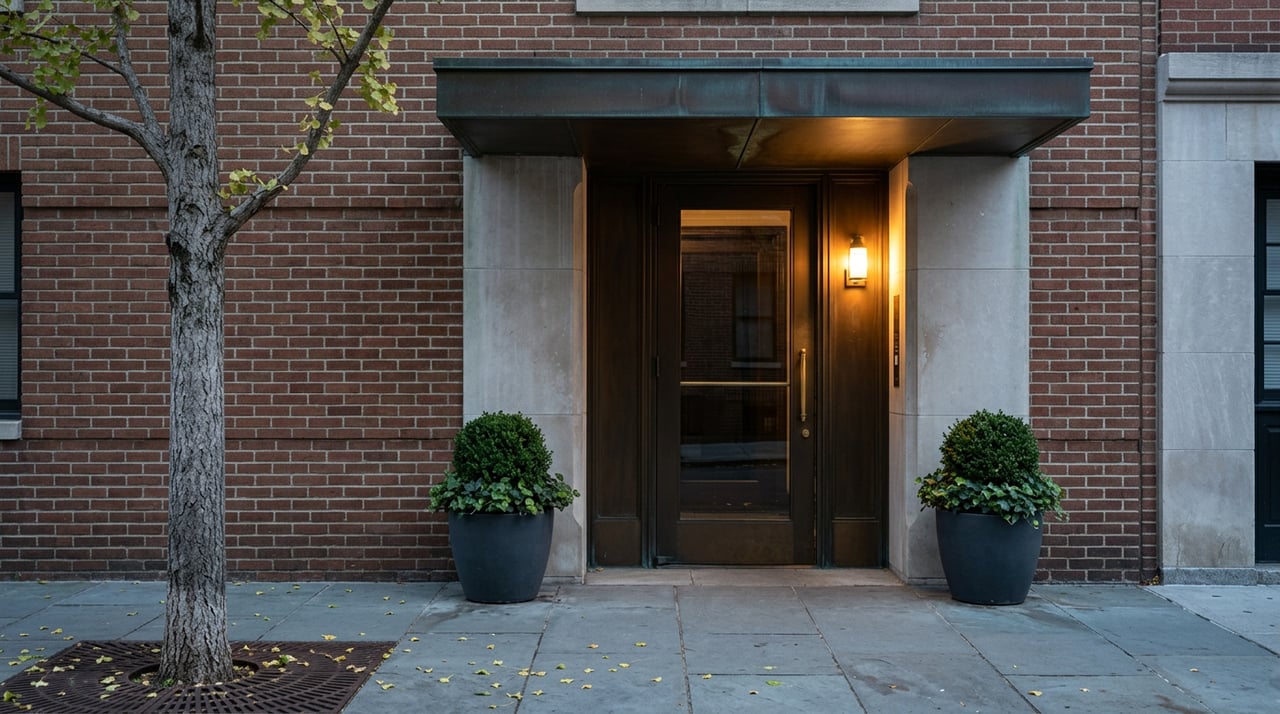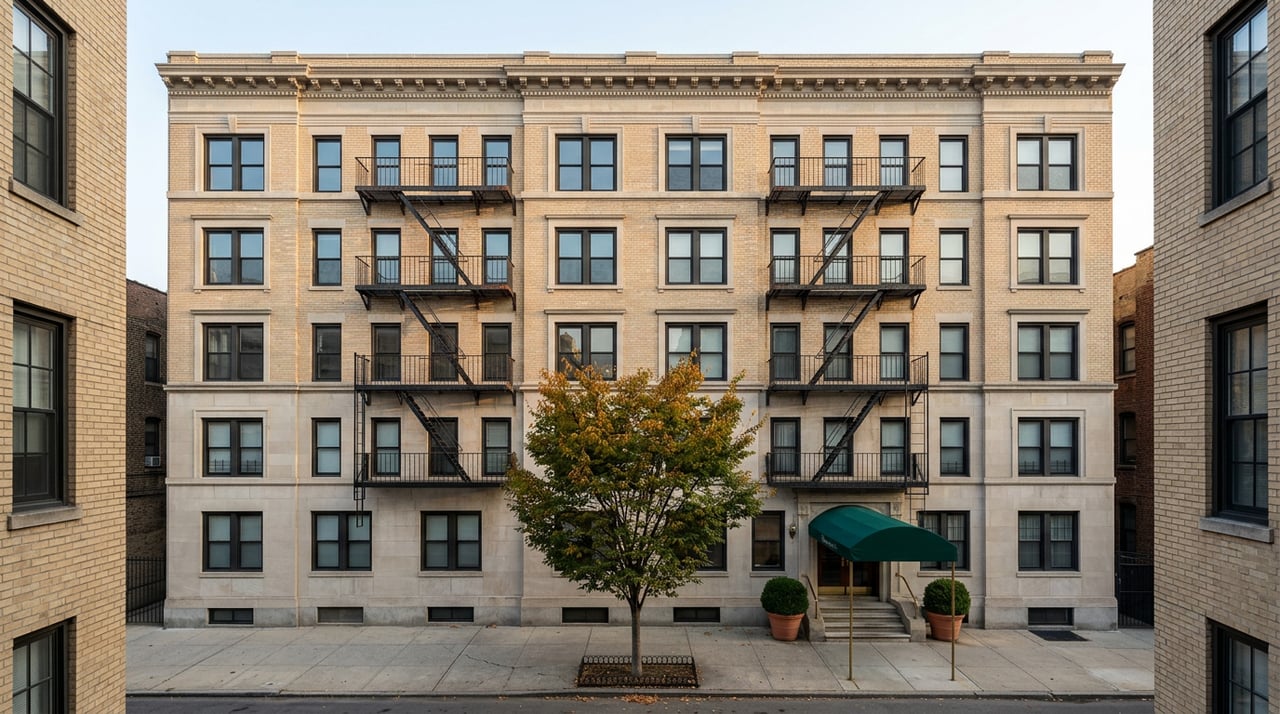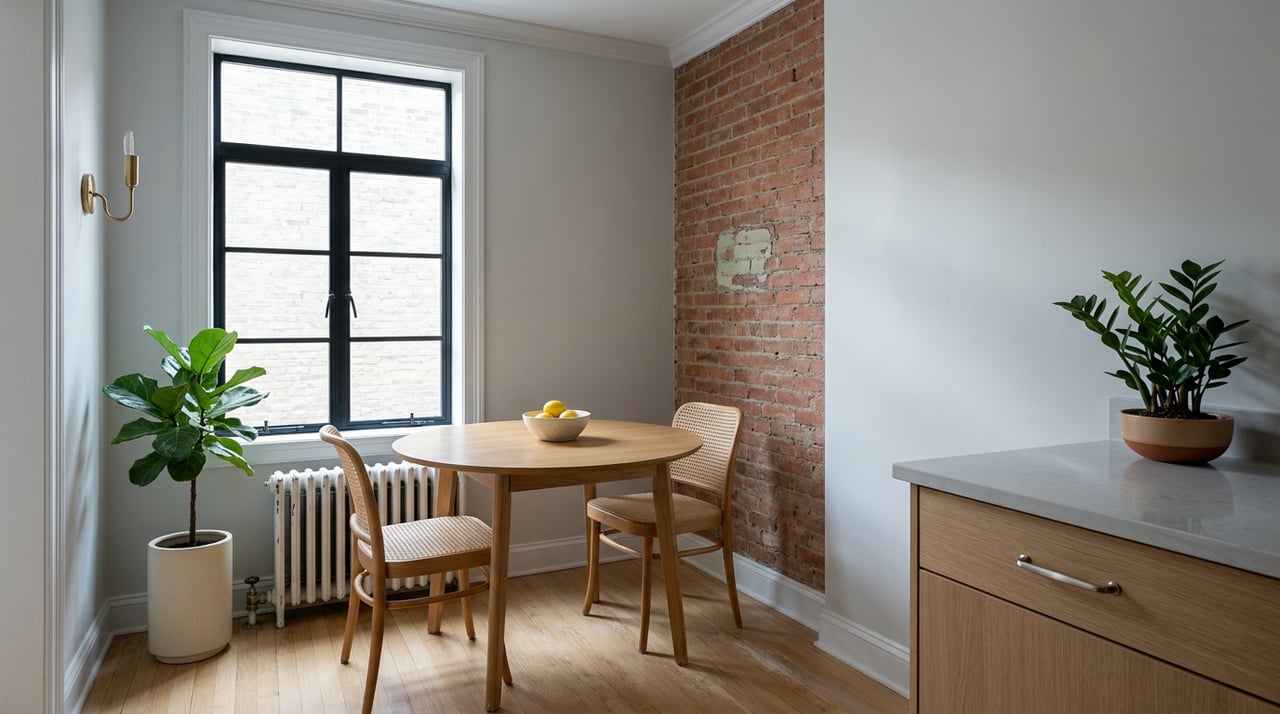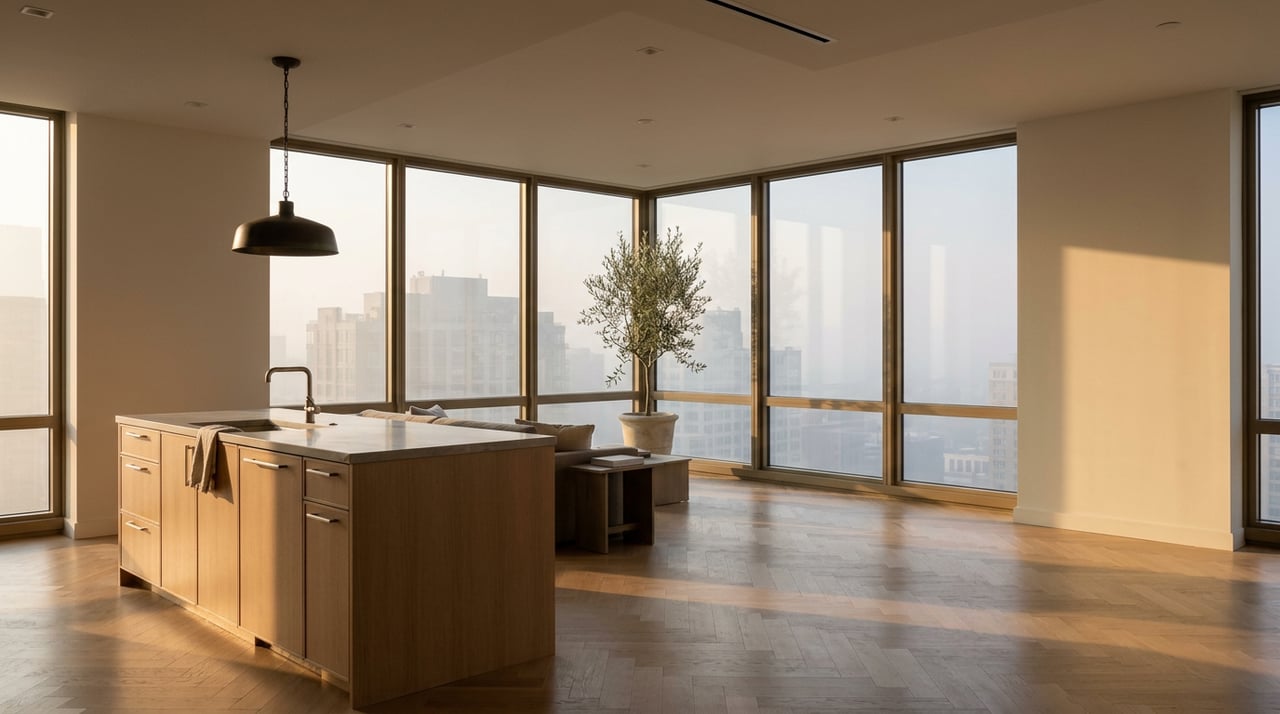
Stand on Water Street this fall and you can watch the paradox happen in real time. Scaffolding wraps three sides of 77 Water Street. A block south, 80 Pine Street is mid-transformation into Pearl & Pine. Across the way, 25 Water Street has already delivered more than 1,300 finished apartments under the name SoMA, the largest office-to-residential conversion completed in the country. By every visual cue, the Financial District looks like a neighborhood about to get a lot cheaper to buy into.
It hasn't. The median condo sale price in the Financial District hit $1.3 million in March 2026, up 36.6 percent year over year, according to public sales-price tracking from PropertyShark. Redfin's own numbers for the same month put the median at $1.4 million, up 34.9 percent, with homes selling faster than the year before. If you're comparing FiDi to Tribeca or the West Village while shopping for a condo, that combination, a construction boom paired with a price spike, should not make sense. It does, once you understand what these conversions are actually built to become.
The Rule That Decides What Gets Built
Almost every large office-to-residential conversion in the Financial District right now is chasing the same tax incentive: 467-m, New York State's Affordable Housing from Commercial Conversions program. It offers real property tax exemptions running 25 to 35 years, with the longest exemption reserved for projects that started construction by June 30, 2026. That deadline just passed.
The detail that matters most for a condo buyer isn't the tax rate. It's the eligibility rule sitting inside the NYC Department of Housing Preservation and Development's own program page: eligible buildings must be operated as rental housing. Not "may be." Must be. A developer converting an office tower can't take the 467-m exemption and sell the resulting units as condos. The program also requires at least 25 percent of units to be set aside as rent-stabilized affordable housing, permanently, which locks in the rental structure for the life of the building.
That single clause explains why the skyline of cranes downtown is a rental story almost from top to bottom. Add up the unit counts at some of the highest-profile FiDi conversions currently underway or recently delivered and the tilt toward rentals is stark:
- 25 Water Street (SoMA), developed by GFP Real Estate, Metro Loft Management, and Rockwood Capital: 1,320 rental units, the country's largest office-to-residential conversion by unit count.
- 80 Pine Street (Pearl & Pine), developed by Bushburg with CetraRuddy as architect: 713 rental units.
- 61 Broadway, RXR Realty's conversion of a century-old tower with construction financing from Apollo Global Management: 796 rental homes, roughly 200 of them set aside for households earning 80 percent of area median income.
- 160 Water Street (Pearl House), Vanbarton Group: 588 rental units.
- 77 Water Street, also Vanbarton Group, adding seven new floors: 647 rental units.
- 55 Broad Street, Silverstein Properties and Metro Loft: 571 rental apartments.
- 100 Wall Street, converted by BLDG Management and David Werner Real Estate Investments with a $219 million construction loan from Northwind Group: 168 rental apartments across floors 2 through 11, with the upper floors staying office space.
That's roughly 4,800 new rental apartments from just these seven buildings. None of them will ever appear as condo inventory for a buyer to purchase, because the tax structure financing their construction forbids it.
The Two Buildings Going the Other Way
Condo conversions in the same stretch of Lower Manhattan exist, but they're a different, much smaller category. One Wall Street, Harry Macklowe's restoration of the Art Deco Irving Trust headquarters designed by Ralph Walker, delivered 566 condominium residences. As of this summer, 21 units were listed for sale with an average asking price around $2,056 per square foot, while recently closed sales averaged roughly $1,837 per square foot, well above the neighborhood's condo median on a price-per-foot basis.
The other notable condo conversion is far smaller: 14 Maiden Lane, a 126-year-old former Diamond Exchange building converted by Diamond Lane LLC into just nine full-floor condominiums averaging about 1,300 square feet, with prices starting near $2.6 million. Diamond Lane bought the building in early 2022 for $9.5 million and turned it into one of the smallest new condo offerings downtown.
Combined, One Wall Street and the Diamond Exchange Condominium added 575 condo units to the Financial District. Compare that to the roughly 4,800 rental units listed above, from just seven buildings, and the ratio makes it obvious why FiDi's construction boom hasn't translated into more condo choices for buyers.
What the Divergence Looks Like on Paper
Zillow's broader Financial District home value index, which folds in co-ops alongside condos, put the average home value at $1,032,877 as of August 31, 2026, up a modest 2.2 percent over the year. That's a very different number from the condo-specific medians above, which show gains in the mid-30 percent range over the same stretch. The gap between a nearly flat blended index and a sharply rising condo-only median is itself the evidence: co-op and blended pricing is absorbing the neighborhood's broader softness, while genuine for-sale condo product, still scarce relative to the rental wave, is getting bid up.
As of early September 2026, there were 206 condos listed for sale in the Financial District at a median asking price of $1.28 million, per Redfin's own snapshot data. That's a healthy number of active listings on paper, but it includes resales across older new-development towers built between 2019 and 2024 alongside the handful of genuine conversion condos like One Wall Street. Price per square foot in the neighborhood runs roughly $1,164 to $1,280, still meaningfully below Tribeca, where comparable product commands $1,800 or more per square foot, and below the West Village, where per-foot pricing runs upward of $1,600. That discount is real, and it's the argument FiDi has made to value-conscious buyers for years. What's changed is that the discount is narrowing faster than the rest of downtown, precisely because condo supply isn't growing the way the neighborhood's overall apartment count is.
The Deadline That Just Passed
The 35-year version of the 467-m exemption, the most generous tier, was only available to projects that started construction on or before June 30, 2026. Projects that break ground now qualify for a 30-year exemption if they start by June 30, 2028, or a 25-year exemption if they start by June 30, 2031. The incentive doesn't disappear, but the clock on the richest version of it has run out.
That matters for anyone trying to read the next two years of FiDi supply. The buildings named above, largely underway before this summer's deadline, will keep delivering rental units into 2027 and 2028. But developers weighing a new conversion today are working with a smaller tax benefit than the projects that broke ground earlier this year, which may slow the pace of newly announced rental conversions even as the current pipeline finishes construction. None of that changes the incentive to build condos instead of rentals, because 467-m was never available to condo conversions in the first place. If FiDi is going to add meaningful new for-sale condo inventory, it will need projects like One Wall Street and the Diamond Exchange, financed outside the rental-tax framework entirely, not more 467-m rental towers.
What This Means If You're Shopping FiDi
If you're comparing the Financial District to Tribeca or the West Village on price per square foot alone, the discount is genuine and it's been holding. What the headlines about "thousands of new FiDi apartments" leave out is that almost none of that new supply competes with a condo buyer. It's rental stock, built under a tax program that requires it to stay that way. The condo market you're actually shopping in is closer to the size it was before the conversion wave started, which is the more useful way to read a 35 percent year-over-year price jump than assuming the neighborhood is simply getting more expensive across the board.
Do office-to-residential conversions in the Financial District ever become condos later? Not under the 467-m program as written. The exemption requires eligible buildings to operate as rental housing, and at least a quarter of units must stay rent-stabilized permanently, so a 467-m building converting to condo ownership down the line isn't consistent with the program's terms.
Is 467-m specific to the Financial District? No, it's available citywide for qualifying non-residential-to-residential conversions. The Financial District has simply attracted the largest concentration of eligible office stock, given its supply of underused towers with the right floor plates for conversion.
Are there other condo conversions in the pipeline besides One Wall Street and 14 Maiden Lane? Some FiDi office buildings, including 150 William Street, have been reported as heading toward residential use, though public reporting hasn't specified whether they'll pursue condo or rental structures. Given the tax mechanics above, any building chasing 467-m financing will end up as rental by definition.
If you're weighing whether the Financial District's discount to Tribeca or the West Village still holds up, or trying to figure out which conversion buildings actually put units on the resale market versus the rental market, that's exactly the kind of question worth a direct conversation before you write an offer. Supernova tracks these conversion pipelines building by building. Work with Elena to get a clear read on what's actually for sale in FiDi right now, and what's just adding to the skyline.